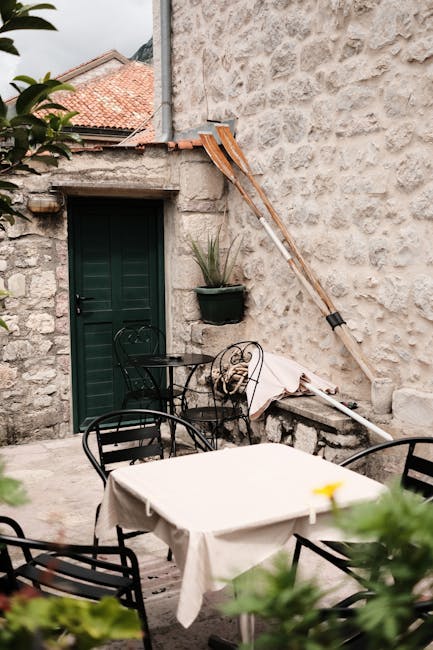
Introduction — Kotor Unplugged: A Slow Stroll Away from the Crowded Quays
Kotor, the Montenegrin gem tucked deep into the bay that bears its name, is often shorthand for cruise ships, busy quays, and the steady tide of visitors flooding the fortified old town. But just a few steps off the main tourist arteries, Kotor hides an intimate geography of narrow lanes, small churches, neighborhood cafés and secluded lookouts that invite a slower, more respectful kind of exploration. This gentle walk isn’t about escaping — it’s a way to know the town differently: to hear bells from an empty square, watch fishermen mend their nets before dawn, smell warm bread from a local bakery and sit aimlessly in a park where locals gather.
This practical, detailed guide is for the curious traveler who wants to give Kotor and its bay some time, to feel their textures: ivy-clad stone walls, hidden graffiti, artisan workshops, stairways slipping up to suspended gardens. I include exact addresses, opening hours, prices in euros and local tips to turn a rushed visit into a meaningful experience. You’ll find alternatives to the quays — early-morning visits, uphill routes off the beaten track, neighborhood cafés with reasonable prices, food markets and small beaches where locals like to hang out.
Throughout the text I flag practical points: where to start the walk, how much to budget for a museum entrance or a drink, and the best times to head out to avoid crowds. You’ll also get ideas for extending the day after the main sites close: sunset photo spots, cafés open late, and wine bars to sample the local Vranac. The aim is simple — let you taste Kotor at a human pace, reconnect with detail, and leave with images, encounters and tips that don’t appear in every guidebook.
Before you go: wear comfortable shoes (the cobbled lanes and stairways are uneven), bring a reusable water bottle (local fountains are often drinkable) and carry a little cash in euros for small purchases from artisans. Pack your camera but favour watching over compulsive shooting: some scenes gain power when you look at them for a long time. Visual cues sprinkled through this guide will help you picture each stop — exact spots, sunsets, traditional dishes and panoramas from viewpoints that, despite their beauty, remain surprisingly calm.
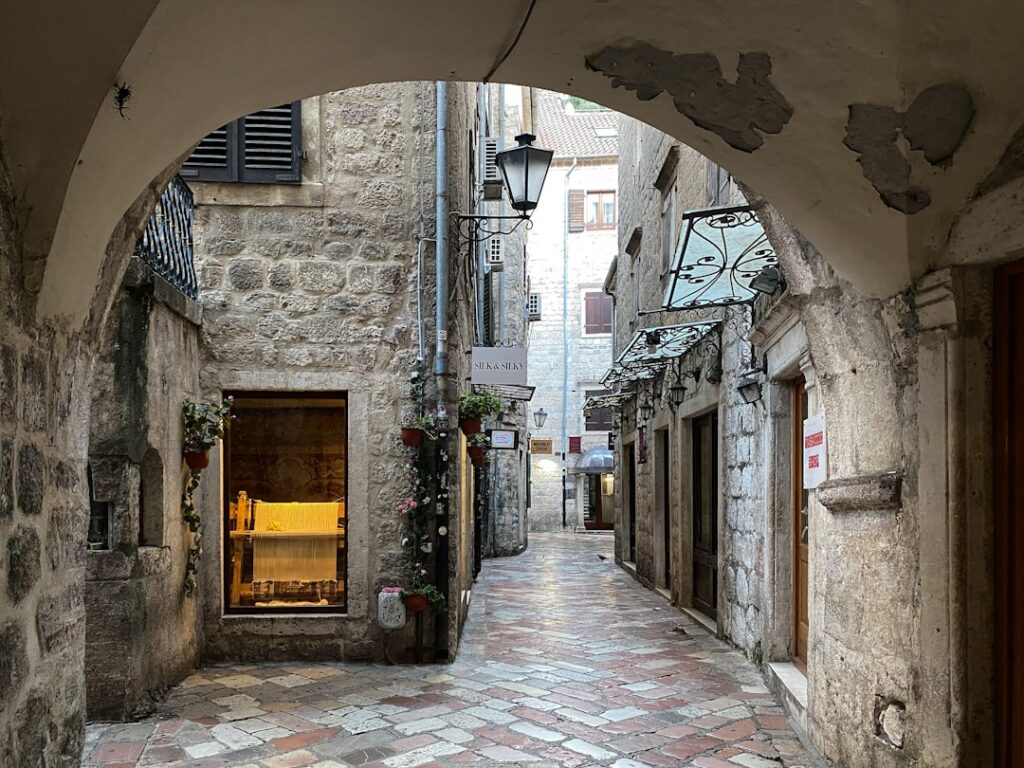
1) Quiet Lanes and Squares in the Old Town — routes and addresses
Kotor’s old town (Stari Grad, Kotor 85330, Montenegro) is compact but full of peaceful corners if you know where to look. Skip the Obala Promenade (the main quay) late in the morning and head instead to:
- Trg od Oružja (Arsenal Square) — Address: Trg od Oružja, Stari Grad, Kotor 85330. Description: a stone-paved square lined with small craft shops and medieval façades. Cost: free. Hours: open all day. Tip: early morning (7–9am) the light on the stone walls is perfect for photos and the atmosphere is quiet.
- Ulica Dobrota (north of the old town) — Address: Ulica Dobrota, Stari Grad, Kotor 85330. Description: a network of residential lanes where you’ll see everyday life: cats sunning themselves, tiny tailor shops and fishing-supply stores. Cost: free. Hours: all day, though workshops usually open around 9am.
- St. Catherine’s Chapel (Crkva Svete Katarine) — Address: Stari Grad, Kotor 85330, east side of the old town. Description: a small, low-key Orthodox chapel, often empty outside of services. Cost: free. Hours: check service times locally (usually mornings and Sundays).
Suggested route (a relaxed 1h30 walk): start at the northern gate of the old town (Northern Gate), follow Ulica Dobrota toward Trg od Oružja, climb up to the small St. Catherine’s Chapel, then lose yourself in the perpendicular lanes heading toward the inner harbour to watch local boats. Rest on the terrace of Caffè Florentina (Obala 80, Kotor 85330) for an espresso (around €1.50–€2.50) and a burek (savory pastry, roughly €1.50–€2.00) — note that very central places can hike prices in high season.
Local tips: walk slowly, chat with shop owners (Kotorans often take pride in their crafts), and respect church service times. If you want a quiet spot in the afternoon, the tiny square in front of Crkva Sv. Luke (Church of St. Luke) rarely gets crowded — approximate address: Ulica Svetog Luke, Stari Grad, Kotor 85330. For photos without tourists, aim for 8–10am or 5–7pm (unless cruise ship crowds arrive).
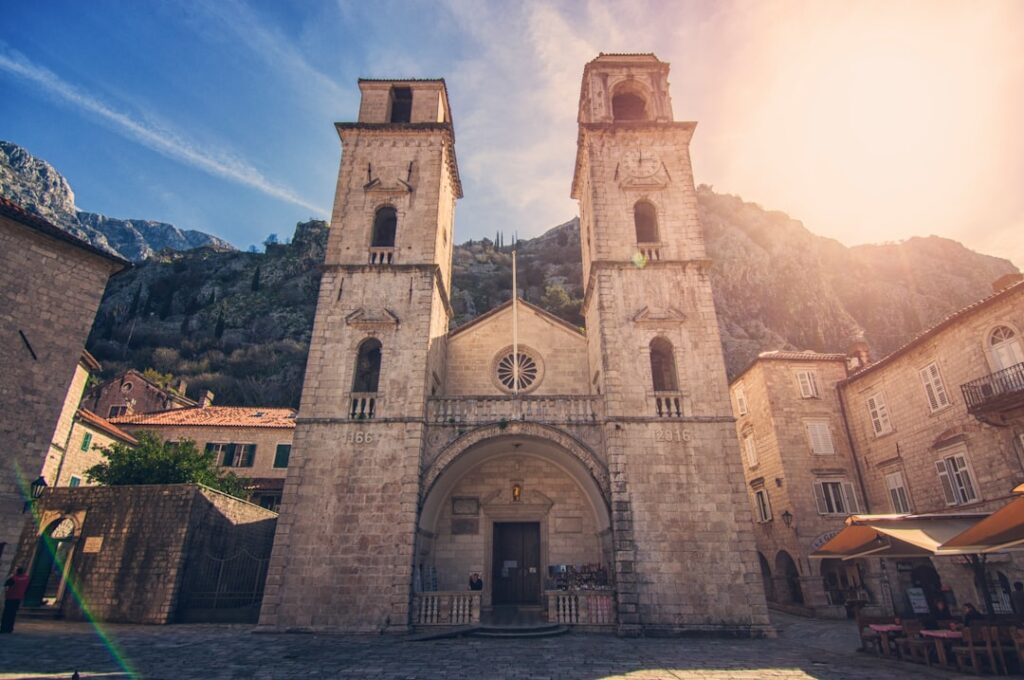
2) Natural Escapes: Forts, Trails and Less-Crowded Viewpoints
Kotor Fortress (San Giovanni Fortress) is famous, but there are adjacent paths and quieter alternatives that are just as spectacular. For a slow nature walk:
- Fortress Trail via Škurda (less busy path) — Starting point: Gate of the Sea, Stari Grad, Kotor 85330. Description: instead of the main crowded route, take the Škurda trail which climbs to the west, crosses Mediterranean scrub and offers mid-way panoramas over the bay. Duration: 1h30–2h round trip depending on pace. Cost: free. Best times: sunrise (around 5:30–8:00am in summer) or late afternoon (4–7pm).
- Vrmac Ridge Hike — Starting point: Road to Fort Vrmac, Vrmac, Kotor 85330. Description: a ridge separating Tivat Bay and Kotor Bay, with quieter trails, forests and Austro-Hungarian military ruins. Duration: 2–4 hours depending on the section. Cost: free. Hours: recommend 7am–6pm; avoid midday heat.
- Bella Vista viewpoint (local name: Njivice viewpoint) — Address: Njivice, Kotor Municipality. Description: a small lookout often overlooked by guidebooks, accessed by a narrow road and a few steps. Cost: free. Hours: open all day, magic at sunset.
Recommended gear: light hiking shoes, hat, water (2 litres for a half-day), salty snacks. Maps: download an offline map (Osmand or Maps.me); secondary trails can be poorly marked. Safety: some stretches are rocky and exposed — avoid in wet weather and bring a headlamp if you might finish at dusk.
Immersive description: climbing toward Vrmac you’ll pass centuries-old olive groves and small terraced farms. The silence is broken only by cicadas and the distant hum of boat engines in the bay. Midway, look for an old concrete bunker — a local favorite picnic spot in the shade. Take the time to let the breeze cool you; the view of Kotor, squeezed between mountain and sea, unfolds like a living model.
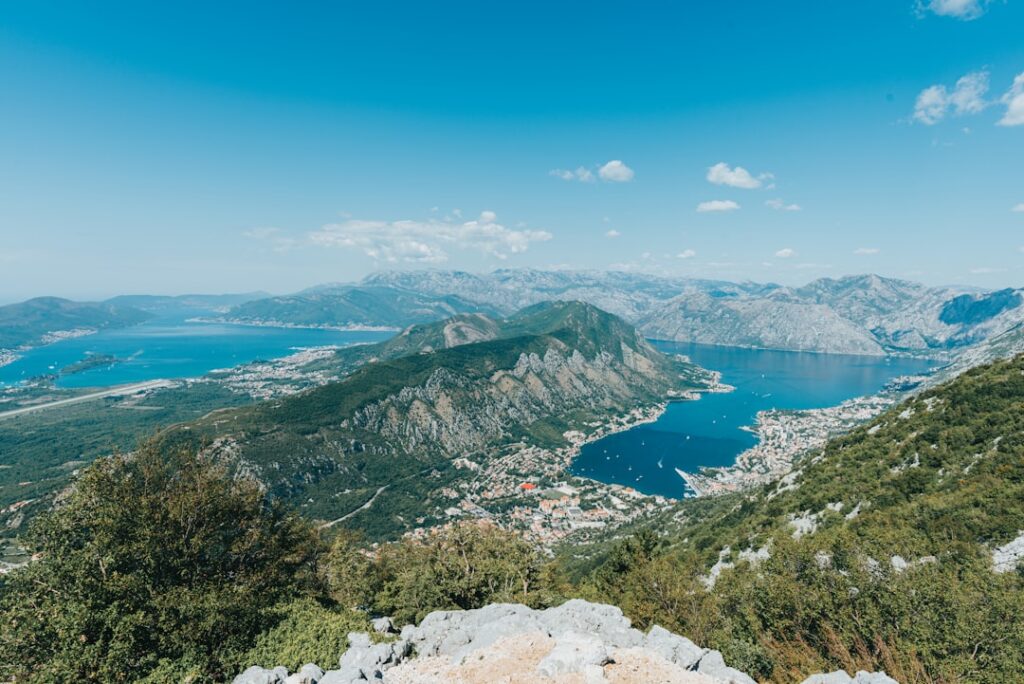
3) Neighboring Villages and Slow Returns: Perast, Prčanj, Morinj
If Kotor’s quays are packed, head to the tiny towns around the bay. They keep a slower pace, with family-run cafés, old churches and intimate fishing quays. Here are three half-day stops:
- Perast — Address: Perast 85333, Municipality of Kotor. Why go: its waterfront is smaller and, outside peak boat arrivals, remarkably serene. See: St. Nicholas Church (Crkva Svetog Nikole, Perast, 85333) and the view of the Our Lady of the Rocks islets (Gospa od Škrpjela). Cost: boat crossing to the island about €6–€10 per person (round trip); local boat hours: 9am–6pm in high season, frequency varies. Tip: arrive before 9:30am to hear the church bells and watch fishermen head out to sea.
- Prčanj — Address: Obala 1, Prčanj, 85334. Description: a long Baroque waterfront with fewer tourists and patrician houses. Try: grilled fish at a waterside restaurant (average €8–€15). Hours: restaurants open roughly 11am–11pm; some cafés open from 8am.
- Morinj — Address: Morinj, Kotor Municipality. Description: a small inland village with pebble beaches and little tavernas. Local tip: Morinj cove is ideal for a morning swim away from the boats. Cost: beach access free; drinks at a taverna €2–€4.
Getting around: local buses connect Kotor to Perast and Prčanj (tickets around €1.50–€3 depending on distance — check at local kiosks). For more freedom, rent an electric bike in Kotor (average €15–€25 per day, rental: Rent a Bike Kotor, Obala 70, Kotor 85330 — hours 8am–8pm). For taxis, agree the fare ahead of time: Kotor–Perast is usually around €10–€15 by day.
Slow experience: don’t try to cram more than an hour into any one spot if your aim is contemplation. Sit in a port café, order a coffee or a glass of local red (Vranac, from about €3–€4 a glass) and let the hours pass watching light on the water. Locals are often happy to share a story about their neighborhood — approach conversations with respect and a few basic words of Serbo-Croatian («dobar dan» for hello, «hvala» for thank you).
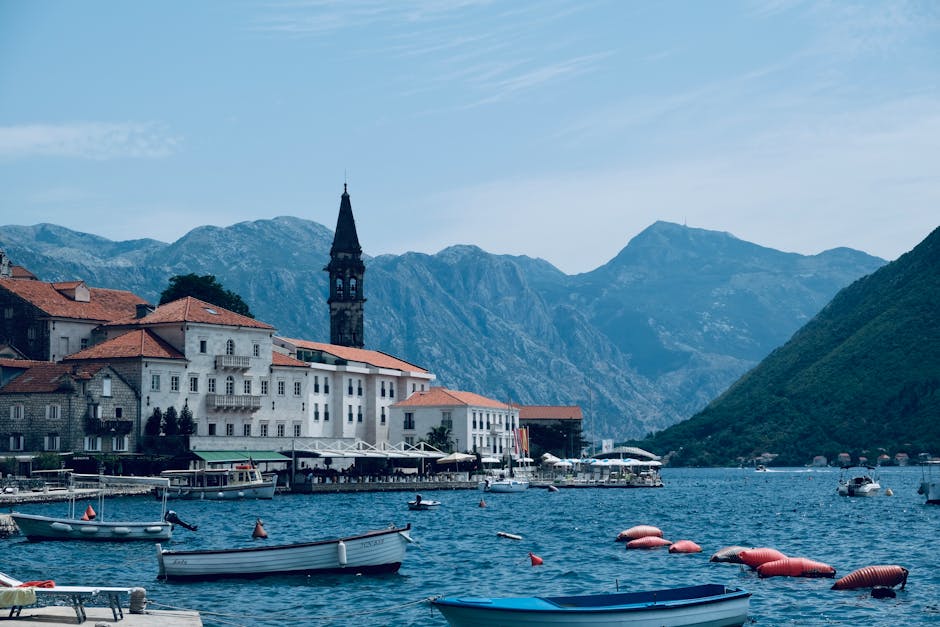
Conclusion — Taking Kotor Home in Your Own Rhythm
Kotor reveals itself when you give it time: walk without a tight schedule, linger on a terrace longer than intended, climb a trail for the view and return down a different path. This guide has offered alternative routes to the crowded quays and concrete addresses — squares and lanes in the old town, Vrmac trails and neighbouring villages like Perast, Prčanj and Morinj — with the practical details (addresses, approximate hours, prices in euros) you need to plan a slower, richer visit.
Final practical tips: pick off-peak hours (early morning and late afternoon), always keep a little cash for neighborhood cafés, and respect residents’ peace. If you’re traveling in peak season (July–August), try alternating a morning in the old town with an afternoon in a nearby village to escape the crowds. Use local small boats for short crossings rather than large tourist excursions — it’s cheaper and gives a more authentic feel.
Above all, discovering Kotor differently is a mindset: slow down, observe, talk, taste. You’ll leave with memories that are less ‘‘postcard’’ and more ‘‘lived fragments’’ — the scent of fresh bread in an alley, a bell’s ring at sunset, the crook of an old fisherman mending his net. Those moments, more than the Instagram spots, are what stay with you and may well bring you back for more slow walks.